As Pressure Grows, Big-Gift Fundraising Is Changing
Competition and challenges are growing, but the role of frontline fundraisers may also be getting more attractive.

By Drew Lindsay
Contributor
May 5, 2026 | Read Time: 12 minutes
The layoffs arrived last summer, the third round in five years. Along with buyouts, the downsizing slashed 15 percent of staff at San Francisco’s KQED, victims of unexpectedly sluggish revenue, economic volatility, and looming federal cuts.
A few days later, the organization lost about $8 million in federal funding — a little less than one-tenth of its budget — after Congress gutted the Corporation for Public Broadcasting.
The 71-year-old station, one of California’s largest public-media news outlets and a ratings star nationally, is asking each of its 250,000 contributors to help fill the gap. But about 1,300 get special attention — phone calls, visits, invitations to exclusive events. These are the group’s major donors, individuals who’ve donated $5,000 or more to the station. Though they make up less than 1 percent of the group’s supporters, they provide about 20 percent of its revenue.
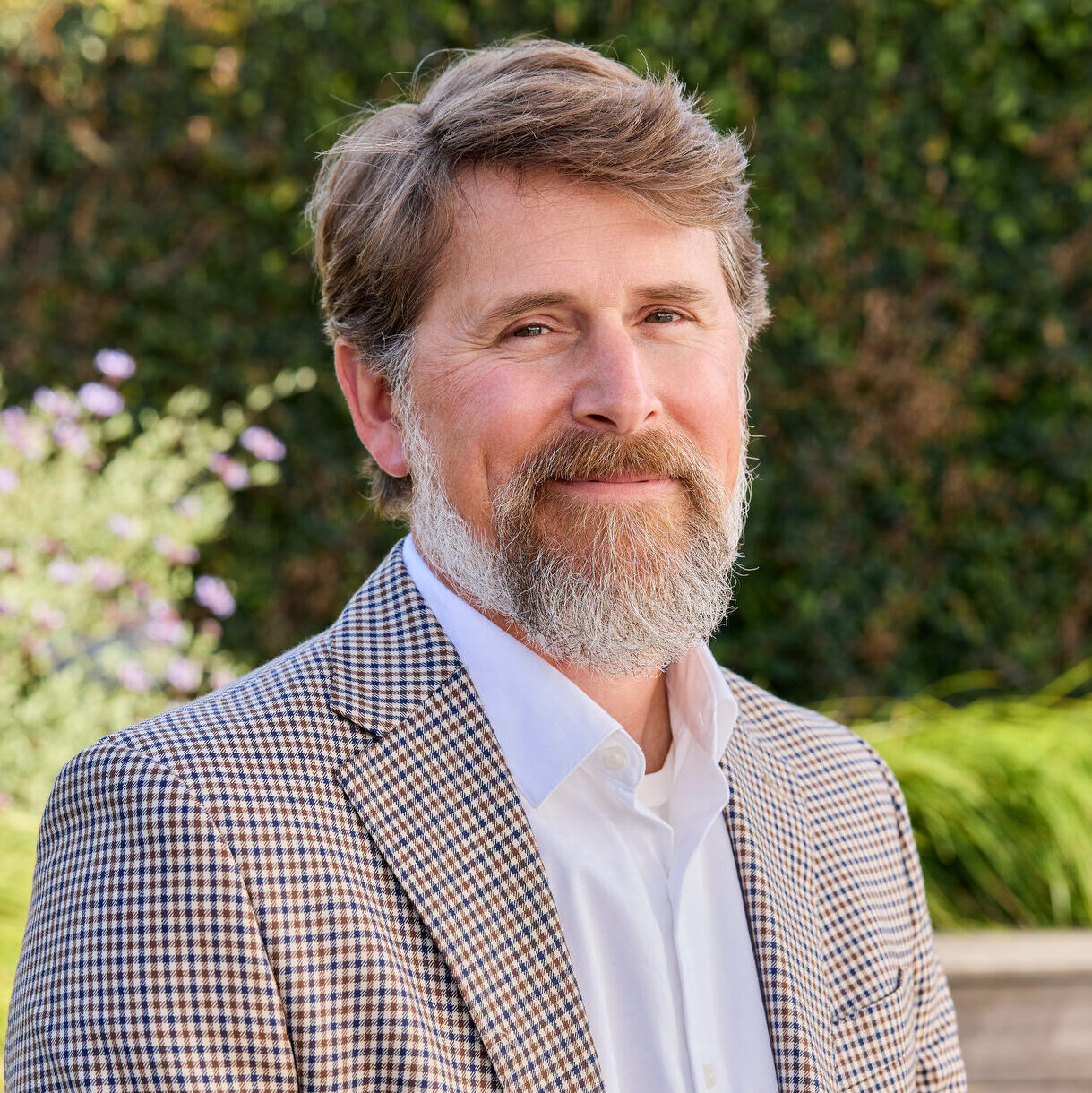
Clearly, the station’s big donors have the wherewithal to blunt its fiscal pain, says Matt Hitchcock, KQED’s senior director of major gifts. “It’s just a matter of asking.”
Hitchcock’s team is one of many major-gift operations facing yet another stress test in what has been a decade or more of change in big-dollar fundraising. Gift officers — once a luxury enjoyed chiefly by well-resourced organizations like colleges and hospitals — are now essential for groups of all kinds. Publicly funded social-service agencies like homeless shelters, membership-driven organizations like the YMCA, walkathon revenue giants like the diabetes-fighting Breakthrough T1D — they all have created or doubled down on efforts to raise money from the wealthy. Even the Movement for Black Lives, which describes itself as anti-capitalist, has a team dedicated to working with high-net-worth individuals.
“The competition for dollars has never been greater,” says Paul Johnson, a former arts and higher-education fundraiser who now leads the Creative Fundraising Advisors consultancy.
Even as pressure grows to land big checks, the job of the major-gift officer has evolved, in some cases radically. The archetype of the road warrior who charms donors and single-handedly lands big gifts is still a fixture. But it’s giving way as more gift officers work within a sophisticated infrastructure that includes data analysts, communications professionals, and top leaders. Success is a byproduct of that system’s effectiveness, not a single fundraiser’s charm offensive.
“We don’t get to transformative gifts by personality,” says Ron Goines, managing director at the Drug Policy Alliance and former director of resource strategy and development at the Movement for Black Lives.
The work is no longer just, ‘OK, go to Florida in February and do your donor visits.’ It’s certainly become a more demanding job.
— Sarah Krasin, managing partner at CCS Fundraising
Building donor relationships remains paramount, but “we definitely are moving away from charismatic-driven hiring,” says Chelsey Megli, who leads talent management for the fundraising teams at Johns Hopkins University and its health care system — fundraising powerhouses that have netted more than $4.5 billion from alumnus and media tycoon Michael Bloomberg. “Increasingly, fundraisers aren’t the center of attention in the room anymore.”
The change comes with new opportunities for growth and respect. Even job titles are changing, with some organizations opting for “philanthropy adviser.”
At the same time, bosses and donors expect more. “The work is no longer just, ‘OK, go to Florida in February and do your donor visits,’ ” says Sarah Krasin, managing partner at CCS Fundraising. “It’s certainly become a more demanding job.”
The MacKenzie Scott Effect
The boom in major-gift fundraising — and the evolution within — stems in large part from changes in philanthropy that are scrambling the sector.

Many groups are turning to major donors because they see that America’s wealthy are growing richer. The number of U.S. households worth $30 million or more has nearly doubled in five years to more than 190,000, according to research firm Altrata.
Though MacKenzie Scott doesn’t accept solicitations, her high-profile giving spree is among those prompting groups to go big-gift hunting, says Paul Dana, a fundraising consultant who works with many small organizations launching their first major-gift programs.
“I think there’s a bit of envy, like, ‘Oh, I see these other organizations raising these big gifts, and I need to figure out how to do that,’ ” says Dana.
In some instances, nonprofits are responding to wealth popping up in their donor rolls. Since just before the pandemic, KQED’s major-gift operation has grown from one to seven fundraisers. They bring in about $18 million a year — up from $6 million.
Donors often don’t have time for traditional cultivation — they don’t want to meet for lunch or coffee.
Other groups see big donors as a hedge against a revenue stream that’s slowing or at risk. Annual giving — particularly at colleges and universities — has been hit hard as the share of American households giving to charity has declined from about two-thirds in 2000 to less than half in 2024, according to the Indiana University Lilly Family School of Philanthropy.
More recently, 45 percent of nonprofits reported that federal funding was canceled or not renewed in 2025, according to a Mission Partners-Chronicle of Philanthropy survey
The Lincoln Center Theater in New York hired Mary Angelo, its first dedicated major-gift officer, in 2023. The arts as a whole have suffered from National Endowment of the Arts cuts, slumping post-pandemic ticket sales, and a drift of corporate and private funders away from the arts, Angelo says.
“The focus increasingly is on major gifts,” she says.
Not Such a Simple Job Anymore
As organizations build out major-gift operations, the job of the frontline fundraiser has become more sophisticated and complex.
Neuroscience and behavioral psychology are unlocking key mysteries of giving, introducing science to a field that previously saw fundraising chiefly as an art. Research by experts such as Russell James at Texas Tech and Neurogiving author Cherian Koshy address how to build relationships, understand donors’ motivations, and balance appeals to emotion and reason.
“We simply have a much better understanding of human behavior now when it comes to charitable giving,” says Laura MacDonald, founder of the Benefactor Group, a fundraising consultancy. Some groups are hiring outside firms to coach up their gift officers, MacDonald says, while others are sharing information informally.
The gift officer’s job is also changing with the increasing availability — and importance — of data. Even without help from prospect researchers, fundraisers can mine information about a donor’s wealth, interests, and giving habits via social media, campaign-finance and securities databases, and wealth-screening services.
Big organizations, meanwhile, are building teams of data-science professionals who compile statistical portraits of donors that rate their engagement with the organization, their affinity, and their propensity to give. These portraits draw on internal data such as how often donors open an organization’s emails or interact with its social media. Third-party sources provide, among other things, news of real-estate or stock transactions.
Previously, fundraisers relied chiefly on instinct to decide whom to prioritize in their portfolio, how frequently to engage, and when to make an ask, says Kathleen Seitz, chief global development officer at Breakthrough T1D, which boosted major-gift revenue from $33.5 million to $125 million in just two years. “Now, in many cases, they’re being fed that information and using it alongside their own intuition and expertise.”
Also adding to the complexity of the gift officer’s day-to-day work: the growing sophistication of charitable giving. Over the past decade or so, the wealthy have increasingly eschewed large cash gifts in favor of donated assets — stocks, cryptocurrency, real estate, and holdings in businesses, trusts, or retirement accounts.
What’s more, the wealthiest individuals seldom act alone. They operate within an ecosystem of wealth advisers, philanthropy consultants, donor collaboratives, and other players who curate the donor’s portfolio and “shape how and when the money moves,” says Goines of the Drug Policy Alliance. The most successful organizations, Goines adds, “stop thinking in terms of a single relationship.”
Increasing Donor Demands
Donors themselves are adding new layers of work to the job. Increasingly, fundraisers say, gifts are not reflexive acts of charity but deeply researched endeavors to net the most good possible for the donated dollar. Donors want to probe finances, operations, and impact.
“There’s been a tremendous increase in the amount of information that people want to know,” says KQED’s Hitchcock. Even those who haven’t made a large donation in years “are still asking as many details as anyone making a $1 million gift.”
Donors often don’t have time or patience for traditional cultivation. “They don’t want to go to lunch. They don’t want to have that cup of coffee,” says Christine Bork, chief development officer at the American Academy of Pediatrics, which raised $25 million in 2025. Donors ask a lot about their role in delivering impact. “And you had better come prepared with that answer at the very first meeting.”

Donors today also are interested in “immersive experiences” in which they can see the organization at work, meet the principals, and feel part of it, says Melanie Buhrmaster, vice president of philanthropy at the Food Bank of New York City. Among other things, she arranges for donors to talk with those who come to the organization for help.
“People want to experience their philanthropy,” says the 30-year fundraising veteran.
At Johns Hopkins, Megli coaches her fundraisers to stay close to the university staff and faculty who can help engage donors — for instance, a researcher in a lab that’s part of a capital campaign. “My refrain is: ‘Who’s your internal portfolio and who’s your external portfolio? If there are 30 people you need to be worried about to raise money from, who are the 30 people internally you need to build relationships with proactively?’ ”
New Pressures, Accountability
The new era of big-gift fundraising comes with ramped-up pressures and anxieties. As supersize gifts account for a bigger share of budgets, gift officers worry that their organization’s financial fate rests in the hands of fewer and fewer donors. “Just one thing can swing the budget, and that can be stressful,” says Angelo of Lincoln Center Theater, which raised nearly $24 million last year.
Also, connecting with prospects is increasingly difficult as busy donors stiff-arm get-to-know-you overtures. “I’ve found that with the really big major donors, the philanthropists with a capital ‘P,’ it’s almost like they’re cultivation-proof,” says Kyle Williams, director of philanthropy at Cumberland Heights, which runs addiction-treatment centers in Tennessee.
Donors today want “immersive experiences” in which they can see the organization at work, meet the principals, and feel part of it.
Some fundraisers squirm at the growing importance of data. Bork at the American Academy of Pediatrics recently began measuring “pipeline velocity” — the time it takes a cultivated donor to make a gift. Prospects that move too slowly are removed from the major-gift roster. “We simply have too many prospects stacking up with not enough staff,” she says.
Staff, however, fear they will lose good prospects, Bork says. And they are wary of the new metric’s impact on their performance evaluation. “They don’t like it.”
The best fundraisers find that data enhances their effectiveness, says the Benefactor Group’s MacDonald, but their bosses also can more easily identify top performers and laggards.
“There’s no place to hide,” she says.
Shortcuts and Smaller Portfolios
Still, for some gift officers, the changes in big-money fundraising are making the job easier.
Bigger organizations are building teams to backstop fundraisers. Since 2023, when Breakthrough T1D doubled down on major gifts, it has added 18 staff in roles related to campaign planning, prospect research and management, analytics, donor communications, and stewardship. For the gift officers, “adding the analytics team took us from looking for a needle in a haystack to having a lot of needles presented to us,” says Amber Mueller, who’s been raising major gifts with the organization since 2020.
The communications team creates templates of giving proposals that Mueller customizes. Previously, she spent hours tracking down information and preparing documents that, she admits, “didn’t look professional.”
“We just get to spend more time doing the work that we love and ultimately driving greater impact through philanthropy toward our mission,” Mueller says of her fellow gift officers.
Some organizations are reassessing their expectations of major-gift officers. The size of the fundraiser portfolio is getting a fresh look, for instance. OhioHealth, a large health care system, generally caps the number of prospects for major-gift officers at 70. “The ability of one person to manage 100-plus relationships in any depth or substance feels ridiculous today,” says Simon Bisson, vice president of philanthropy. “It’s just not possible.”
Gift Officer to Philanthropy Adviser
Today’s gift officers are increasingly seen as charitable-giving experts who can offer donors strategy and advice about philanthropy writ large. Some organizations even give fundraisers the title of “philanthropy adviser.”
In the long run, the rebranding could help the profession move away from stereotypes of fundraising as arm-twisting. In a survey of 3,000 people conducted by Russell James, the Texas Tech charitable-giving scholar, donors responded most positively to job titles that suggested guidance or advice.
Noelle Colomé, a veteran of raising big gifts, took the title “director of donor advising” when she joined the Ritter Center, a service agency for low-income families in Marin County, outside San Francisco. Branding her a “major gifts” fundraiser was a nonstarter. There was a “visceral reaction to that,” she says.
Colomé is helping lead a $22 million campaign for the organization. She says she helps donors analyze tax law, learn about giving platforms and vehicles, and determine how best to tap their financial assets for charity. She even helps them advance their philanthropic goals with gifts to other groups. One recent donor wanted to go beyond supporting Ritter’s short-term shelter, so Colomé recommended organizations working on tiny homes and more permanent housing.
Helping a donor give elsewhere might seem odd, but it’s a reflection of today’s wealth and the new era of giving, she says. “These folks have money to give across the counties, states, and nations. They’re going to diversify their philanthropy portfolio just like they diversify their financial portfolio.”