4 of the Best Hacks for Fundraisers and Leaders From AFP Icon
Tips included using animation to tell stories, why it's as important to retain fundraisers as it is donors, and more.

By Rasheeda Childress
Senior Editor, Fundraising

May 6, 2026 | Read Time: 4 minutes
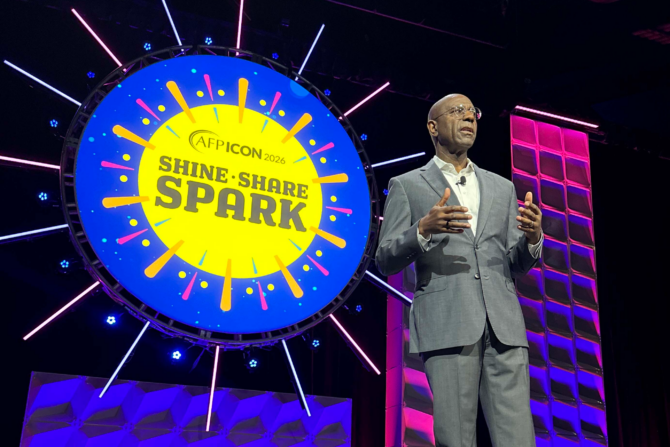
Last week fundraisers from around the country gathered at the Association of Fundraising Professionals conference in San Diego. There were hundreds of sessions to choose from and lots of knowledge offered. Here are four key takeaways.
Ensure donor messages foster trust and loyalty.
Fundraisers spend a lot of energy figuring out ways to engage and retain donors. Sometimes they resort to tactics that aren’t really helpful, said Laurel McCombs, senior philanthropy adviser with the Osborne Group.
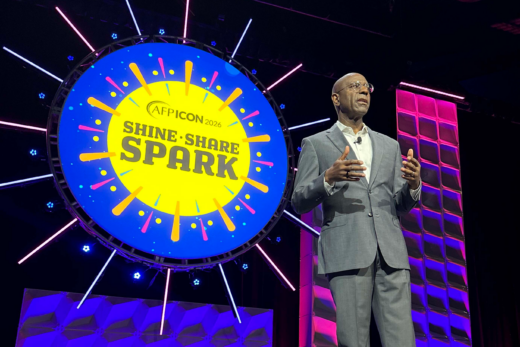
For example, sending donors birthday cards. That’s a great strategy, she said, “if you want to be like my dentist or like my insurance company — they do that, too.” Fundraisers who want to retain donors should focus on trust, impact, and engagement and be really clear about telling supporters what your organization is doing, McCombs advised.
When recognizing donors, focus on the length of time they have been giving to your organization — not just the amount of money. For example, honor five-year, 10-year, and 20-year donors. This will encourage loyalty, which will increase engagement and retention, she said.
McCombs notes that donors want to understand their impact, too. “Donors want to change something; they don’t just want to fund something,” McCombs said. “You are all doing really important work in your communities. Sing it to the rooftops, and especially sing it to the people who are helping make it happen and allow them to do it, too.”
Eliminate barriers to board members’ fundraising.
Board members can really help dial up the success of an organization’s fundraising, but too often they don’t. When board members aren’t fundraising, said Jonathan Meagher-Zayas, founder of Equity Warrior Strategies, it’s often due to unclear expectations or anxiety about fundraising.
Rochelle Jerry, CEO of Jerry Consulting Group, notes that even deeply committed board members can struggle. “The barrier isn’t always capacity,” Jerry said. “It’s clarity and confidence.”
To help with board members who don’t have confidence, offer them tips, remind them that sometimes all the fundraiser needs is a warm introduction.
And if an ask is more likely to result in a “yes” if it comes from a board member, coach them on how to do it, Meagher-Zayas said.
Prioritize staff retention as much as donor retention.
Fundraisers have notoriously short tenures, with many staying only 18 to 24 months. To hold on to fundraisers, leaders must make staff retention a priority, said Julie Naranjo Upham, vice president of individual giving at Conservation International.
“Think about how much money and time your organization spends on retaining donors,” Naranjo Upham said. “That’s not always how much time they spend retaining their staff.”
Managers should ensure that staff are not working to burnout levels and should help them stay motivated. She regularly holds meetings with team members to find out how things are going and what she can do to help.
Keep in mind that one size does not fit all. Naranjo Upham said research shows that generations have differing wants and needs. Gen X, for example, views their time as a really precious commodity and doesn’t want it wasted.
Millennials and Gen Z want empathetic leaders. Some Gen Z staff members like the return to office but want flexibility in dress code.
However, all generations want meaningful work and professional development, and they want to feel appreciated, Naranjo Upham said. If you can do that as a leader, staff will stick around.
Consider using animation to reach supporters.
Many organizations have figured out how to connect with supporters through video and compelling storytelling, but using animation may be a better choice.
Amelia Bird, creative account executive at Next Day Animations, cited research on content retention, which shows that short videos of a talking head, such as a nonprofit CEO, had a retention rate of 70 percent among viewers. That compares with a 92 percent retention rate for whiteboard animation, which generally involves an illustrator creating drawings on a white background and can include elements such as music, voice-over narration, or animated text. That makes it particularly effective for nonprofits that want viewers to see an issue in a new light to change their minds about a topic, Bird said.
Animation can also be helpful when working with vulnerable populations. People who share their story about a difficult time in their life may not want such videos following them around for decades, said Derria Ford, a nonprofit strategist. Animation is a good way to tell a story while protecting the identity of those who share their tales.
Meredith Slater is philanthropy and partnerships lead at ActionAid. She admits most people probably haven’t heard of her organization, an international aid group serving more than 70 countries. This lack of awareness makes fundraising harder, she said, and they’ve turned to animation and have found it effective. “The aim is that people start to know us, they start to trust us, and they choose to make a donation,” Slater said.
The group also created a campaign using animation that is designed to secure legacy gifts. Since the rollout, Slater said they’ve received four pledges.