Inflation, Cuts, Tax Changes: A Tough Year Takes Center Stage at AFP Icon
Among the other topics covered at the Association of Fundraising Professionals conference were federal funding shifts and the need to reach a wider array of donors.

By Rasheeda Childress
Senior Editor, Fundraising
April 29, 2026 | Read Time: 4 minutes
The radical drop in federal funding last year. Military actions in the Middle East. Surging gas prices and high inflation. Nonprofits must raise money in a world that is brittle, anxious, nonlinear, and incomprehensible, or BANI, as Jamais Cascio refers to it.
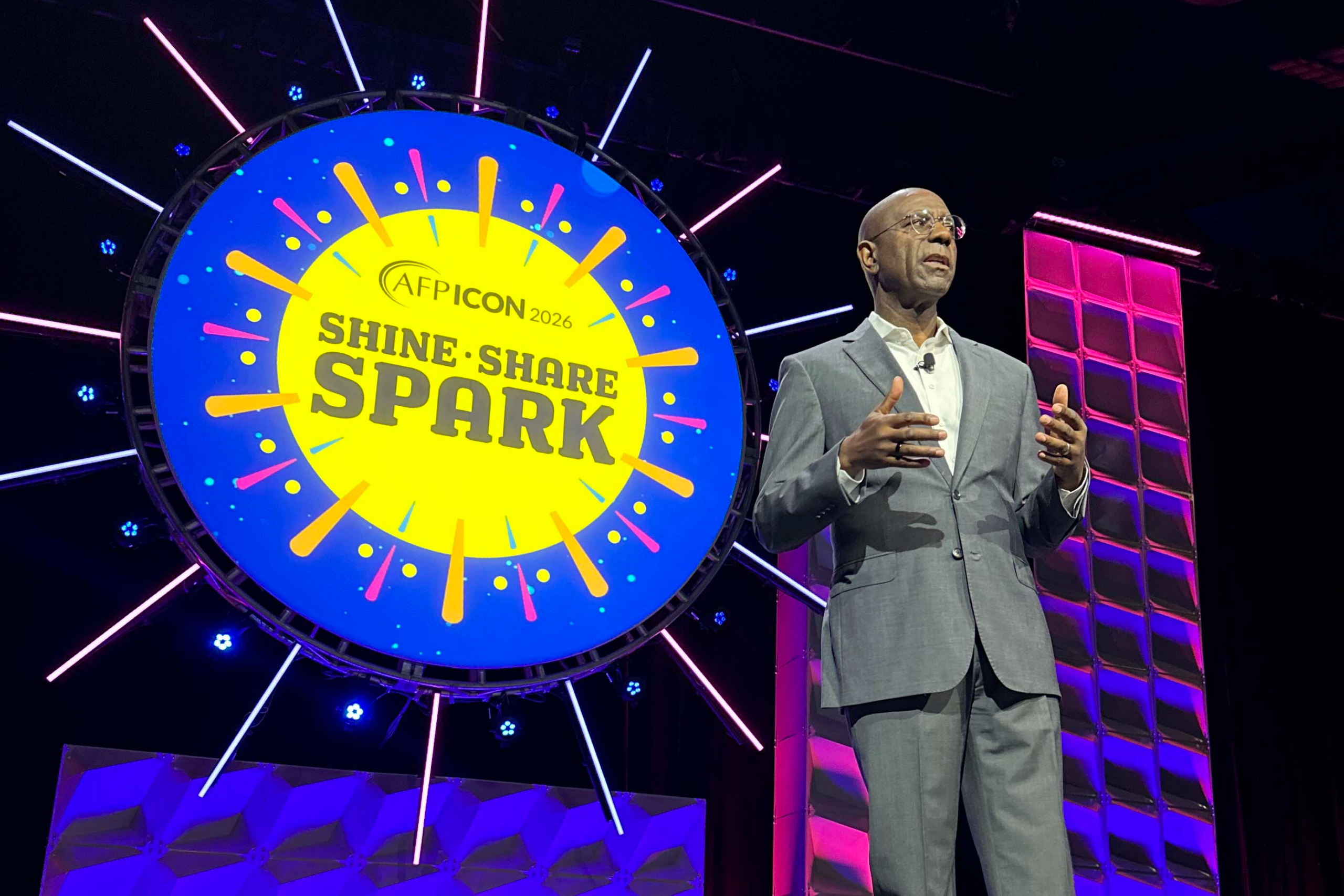
Jamais Cascio, co-author of the book Navigating the Age of Chaos, discussed the difficult landscape fundraisers are trying to negotiate during the keynote for the Association of Fundraising Professionals conference, held in San Diego earlier this week.
“The world can be brutal and vulnerable to sudden collapse,” Cascio said during the address. “Systems may seem strong until they hit a breaking point, and then they collapse. And we’ve seen this time and again with systems that we thought we could rely on.”
A Positive Framework to Deal With Change
Cascio’s outlook, he noted, can feel disempowering, so he and his co-author created a framework to help people cope. They call it BANI positive: bendable in a brutal world; attentive with empathy and kindness; neuroflexible and able to improvise; and interconnected with peers.
“What we can do is figure out how to strengthen ourselves to be able to adapt, to be able to figure out ways to make things better to alleviate some of the issues,” Cascio says. “It is a really important way of thinking about the world because what it tells us is that we can have a little bit of hope.”

The theme of navigating radical change came up in sessions throughout the conference, which covered topics such as federal funding shifts, tax law changes, and the need to reach a wider array of donors.
One panel addressed the challenges of promoting diversity, equity, and inclusion under the current administration.“Nonprofits have been facing increased scrutiny for using equity language,” said Frank Velásquez Jr., founder of 4 Da Hood. “Boards are panicking. Funders are getting nervous. They’re saying, ‘Go back to safer language. Stop making people feel uncomfortable.’” Despite these concerns, Velásquez said, nonprofits have to “talk honestly about communities we work with.” His co-panelist, Rachel D’Souza, founder of Gladiator Consulting, acknowledged that the work can be scary, but nonprofits have to join forces and “decide to be brave together.”
Big changes to the tax law have introduced another element of uncertainty this year. While the prospects of drawing in new everyday donors with a tax break for those who take the standard deduction is a bonus, some of the tax changes could dampen giving by bigger donors and corporations, said Sally Schaeffer, a lobbyist who works with nonprofits. In her session about recent shifts in federal policy, Schaeffer noted it’s important for nonprofits to make clear to legislators how their organizations help the local community.
Schaeffer said every member of Congress has someone in their district office that focuses on federal grants. Nonprofit staff who are constituents should introduce themselves to that person. One attendee, consultant Anthony Petchel, said talking to legislators can help educate them but also can offer a chance to connect with donors. When he worked at a nonprofit, Petchel invited a donor to a meeting with a legislator to discuss issues related to homelessness.
Legislators take note when you bring a donor; they are very interested in having a constituent in the meeting, he said. “It allowed us to have a deeper conversation.”
After the meeting, Petchel stayed in touch with the donor and offered updates on the status of the legislation. His ongoing outreach made the donor feel more committed to the cause, and she moved from five-figure giving to six-figure giving, he said.
‘We Have the Capacity’
One first-time attendee at the conference, Rich Cole, director of fund development from Jobs for Ohio Graduates, just got into fundraising four months ago. Despite the focus on so many challenges, Cole is upbeat.
He’d heard the term BANI before but was excited to hear about the positive version of the framework. “It’s really easy to slip into talking about how awful things are and let that be the entirety of the conversation,” Cascio said.
“We have the capacity, nature has the capacity, to accept dramatic change, accept chaos and evolve with it, and flourish. I want us to think about how we can flourish in a world of chaos.”