Community Foundations Assail Big DAFs’ Freeze on SPLC Gifts
Following the federal indictment of the Southern Poverty Law Center, commercial donor-advised funds froze grants to the SPLC. In response, smaller DAFs urge donors to put their money elsewhere.

By Alex Daniels
Senior Editor, Foundations
May 7, 2026 | Read Time: 6 minutes
Community foundation leaders have expressed outrage that three of the biggest donor-advised fund groups are prohibiting account holders from making grants to the Southern Poverty Law Center, a civil rights nonprofit that is the target of a highly contested criminal indictment, and they are urging donors to remove their funds.
Last week, following the U.S. Department of Justice’s indictment of the Southern Poverty Law Center for alleged donor fraud for paying informants who infiltrated racist extremist groups including the Ku Klux Klan, three donor-advised funds associated with major financial services firms responded quickly. Fidelity Charitable, Vanguard Charitable, and DAFGiving360, a donor-advised fund associated with the Charles Schwab Corporation, each announced they would no longer send donations to the SPLC.
The leaders of the San Francisco Foundation and other community foundations that run donor-advised funds of their own roundly criticized the move by the big Wall Street-aligned organizations, calling it a capitulation to the Trump administration, which has been hostile to civil rights nonprofits.
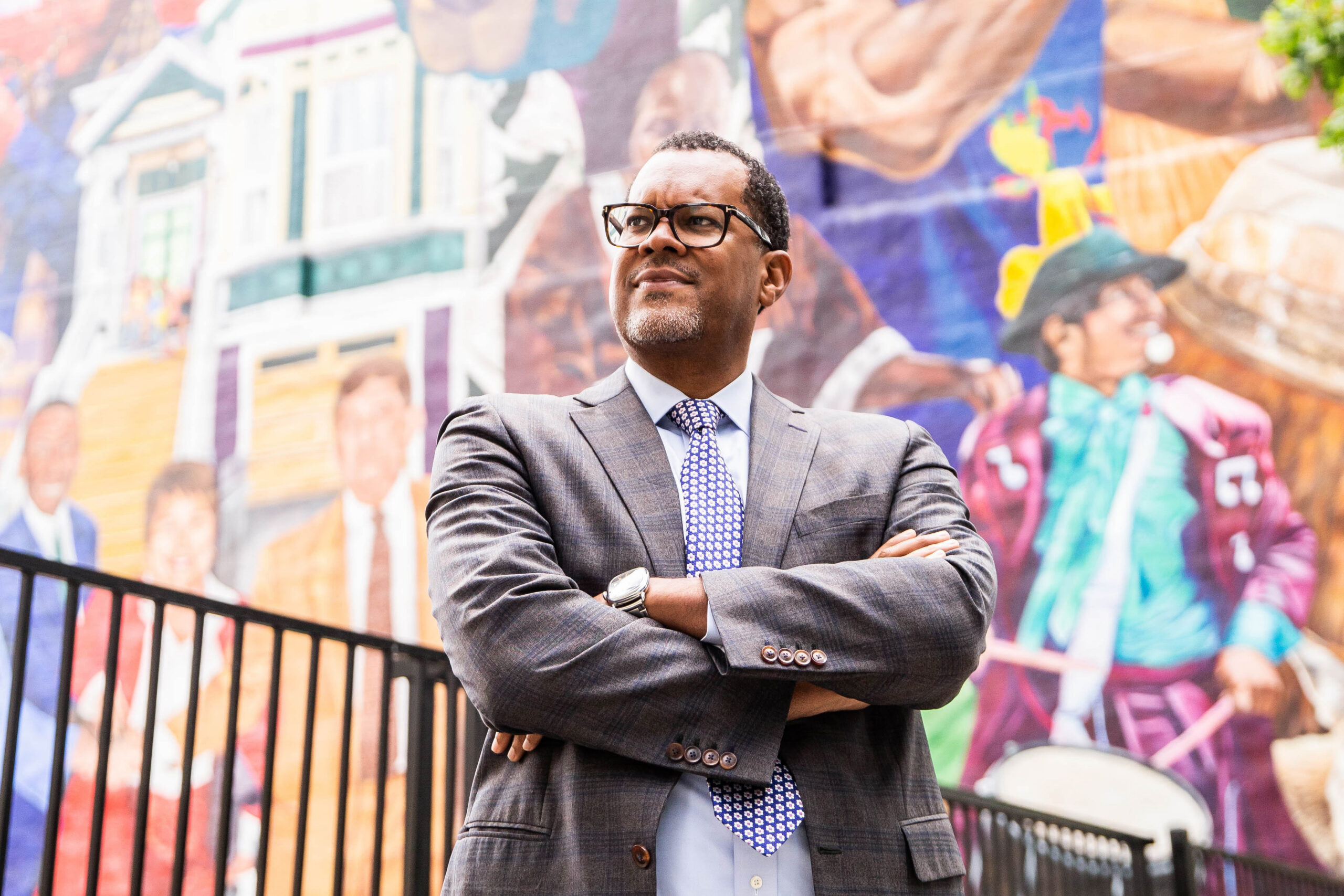
Fidelity, Vanguard, and Schwab are guilty of philanthropic “malpractice” for withholding those grants, said Fred Blackwell, CEO of the San Francisco foundation.
Joining Blackwell were leaders of Assets Under Movement, the Cambridge Community Foundation, and Brooklyn Org, the main community foundation in Brooklyn. Each group criticized the move by the commercial sponsors and then announced that donors to those organizations could easily transfer their charitable assets from a commercial fund to a fund run by a community foundation or could make direct gifts to the Southern Poverty Law Center.
Brooklyn Org went a step further and offered to make a $718 donation to a nonprofit in the borough for each account that is transferred over the next month.
Nonprofits that are legally targeted might need the most support from their donors, said Jocelynne Rainey, president of Brooklyn Org. While the matching offers for donors who transfer their funds from a commercial account has been in the works for a while, she said the case against the Southern Poverty Law Center prompted her to announce it early.
“We wanted to make sure that folks knew there was someplace else they can go in order to continue to support organizations that they care about,” she said. “This is when the philanthropic community and the donors that believe in them should be able to support them.”
Not a Neutral Approach
It is within the rights of a donor-advised fund to refuse to make a gift at the request of a donor. While donors give to a fund with the expectation that they can advise where those charitable dollars will flow, the money is legally controlled by the sponsoring organization — usually a commercial or community foundation fund.
Schwab and Vanguard did not respond to inquiries. Fidelity declined an interview request and pointed to the organization’s regular guidance on when a grant can be declined. Those instances include when “the organization is being investigated for alleged illegal activities or non-charitable activities, such as terrorism, money laundering, hate crimes, or fraud. In addition, other state and federal agencies may review the activities of a charitable organization, which can also affect whether Fidelity Charitable makes grants to an organization.”
Pausing contributions to the Southern Poverty Law Center can’t be characterized as a “neutral, wait and see” approach while the case plays out, argued Blackwell. He said the Trump administration has aggressively used the Department of Justice to attack political foes. By blocking grants before a legal verdict, he said, the commercial funds are taking sides.
“We need to hold firm and hold consistent to the notion of innocence until proven guilty,” Blackwell said.
Consult With Donors vs. Stopping Donations
There is some irony in the fact that commercial funds, Fidelity in particular, have withheld gifts to the Southern Poverty Law Center, said Lawson Bader, president of DonorsTrust, a donor-advised fund that attracts donors who support conservative causes.
That’s because the Southern Poverty Law Center in the past has helped put a spotlight on Fidelity’s donations to what it called extremist groups. In 2019, a Chronicle investigation found that donor-advised funds were among the biggest donors to organizations labeled “hate groups” by the Southern Poverty Law Center. Conservative nonprofits bristled at the characterization, calling it inaccurate.
Bader said in Fidelity’s case the current donation pause may be a tactic to avoid bad PR.
Putting a nonprofit in a temporary “penalty box” could protect donors who want to ensure that their donation is directed to a charitable activity rather than to paying legal bills, Bader said. But the commercial donor-advised funds should have consulted directly with donors rather than putting an across-the-board hold on donations to a specific nonprofit.
“The account holder should be made aware so that he or she can make the best advice,” regarding whether to send a gift or not, Bader said. “That’s how I would approach the situation, rather than making what may be seen as a more political decision in a more political environment.”
Community Foundations — Allies to Donors
Moving money from one donor-advised fund to another is commonplace. An analysis by the Institute for Policy Studies found that $2.9 billion moved from DAF to DAF at national providers in 2023, up from $1 billion in 2019.
The community foundation push comes amid intense competition between commercial and smaller funds, Bader and other donor-advised fund experts said.
Bader’s fund attracts donors who want to ensure their gifts will be steered to conservative groups. Likewise, Blackwell and Rainey’s community foundations are situated in cities that are largely progressive and can steer donors to particular nonprofits that they have experience working with. Donors to them know upfront what each foundation supports.
Blackwell and Anna Fink, president of Assets Under Management — formerly Amalgamated Foundation — also have set up screens to block donations to hate groups. Donors know this upfront, and it is viewed as a selling point, according to Karl Mill, a lawyer who advises charities and foundations. While commercial foundations have a strong reputation for handling complex assets and charging low fees, community foundations hold themselves up as being allies with their donors.
“They need to find a way to distinguish themselves from commercial foundations,” he said. “It’s hard to compete on fees and on the administration of financial assets.”
But it is more than a selling point, said Fink. The nonprofit, which manages donor-advised funds, in 2019 ran the Hate Is Not Charitable campaign to pressure donor-advised funds to cut the flow of money to hate groups.
The current controversy over the blocked grants to the Southern Poverty Law Center makes it clear that donors need to be educated on the fact that donor-advised sponsors have legal control over the funds they manage.
“When the largest sponsors in the country can quietly narrow what qualifies as charitable, that’s not a one-off — it’s a structural question the whole field needs to reckon with,” she said in a statement.
Correction: A previous version of this article referred to Assets Under Movement as Assets Under Management.