Matchmaking Database Offers Easier Path to Grants
The Philanthropy Data Commons has the potential to make the grant application process much easier — and provide a clear view of impact.

By Alex Daniels
Senior Editor, Foundations
April 17, 2026 | Read Time: 9 minutes
Could the soul-sucking process of applying for philanthropic grants be on the way out? That is one of the goals of a new $8 million effort supported by the MacArthur Foundation.
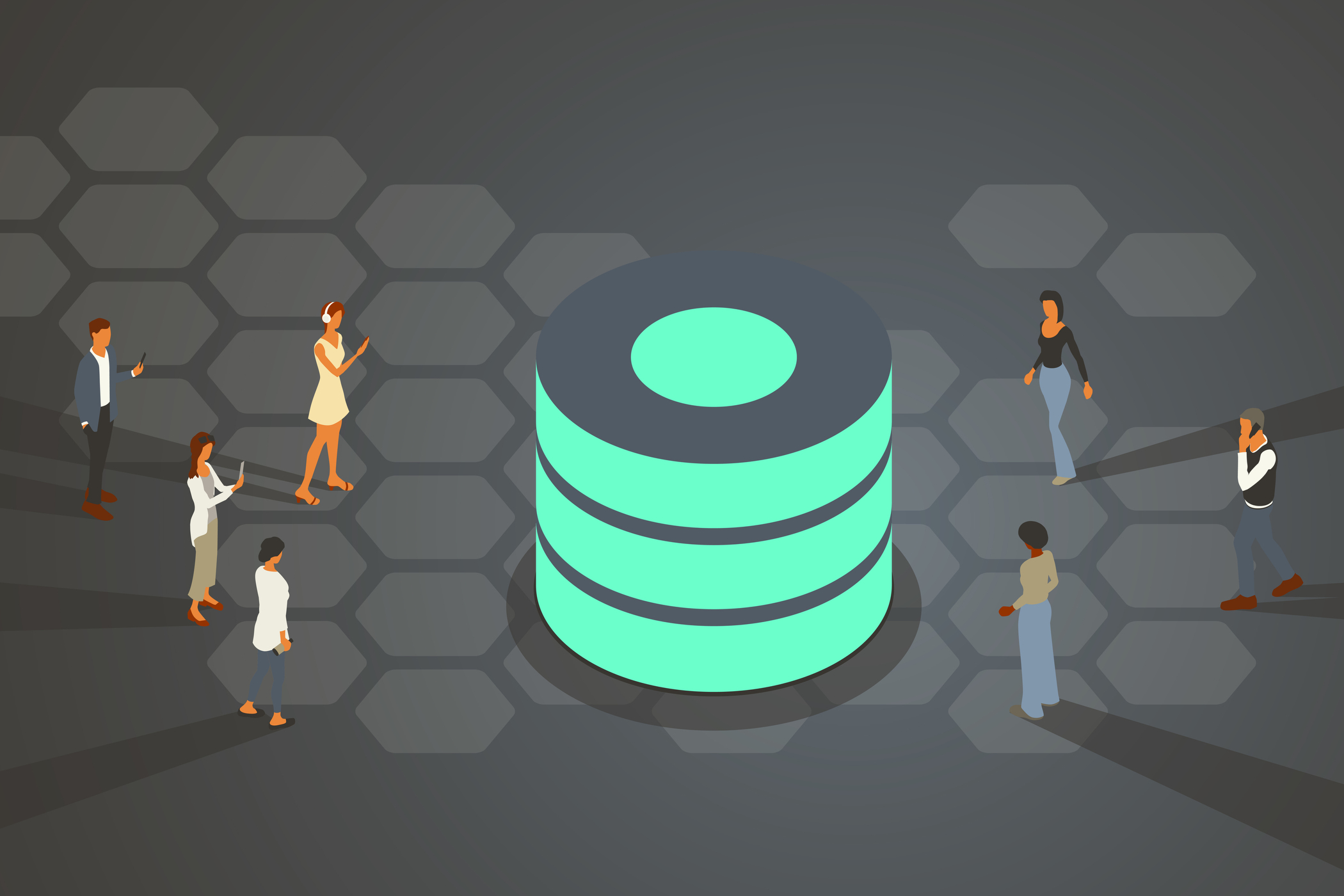
The project, dubbed the Philanthropy Data Commons, is an attempt to bring a huge reservoir of foundation and charity information into a single database. Grant seekers and grant makers can drill into the data to find partners that share the same goals, among the vast universe of tax-exempt organizations.
“It should take nonprofits less time to apply for grants and allow them more time to spend on their missions,” said Elizabeth Kane, co-director of the Commons. “By the same token, many funders struggle to find and support organizations that are aligned with their goals. It could make the grant application process more efficient for both sides.”
Currently, the publicly available data from Internal Revenue Service filings that nonprofits can scour for grant information is limited. It only provides basic personnel and financial information and lacks detail about what work funders want to support and how well nonprofits have performed.
If enough organizations provide more granular information to the Data Commons — things like due diligence reports on potential grantees, project timelines, and impact data — the database and the applications created to use it could play matchmaker. Grantees and grant makers could be connected through a largely automated process. Grantees would be able to search grant makers and vice versa. Applications for many grants could be completed with a minimum of keystrokes. For instance, if a grantee located several foundations that matched some basic criteria, it could auto-populate fields in an application using its stored data and send it off to all of the grant makers at the same time.
But the project requires a great deal of buy-in to be truly effective and relies on the willingness of organizations to share data they may consider sensitive.
The project was conceived more than five years ago as a new approach to the common grant application. The idea, that a single application could be used many times, has been widely accepted in the college admissions process but has not gained traction in the foundation world.
College applications all serve a single purpose for a student: getting into school. The colleges consider some universal metrics like grades and standardized test scores, but no such common criteria exist in the nonprofit world. The range of things being funded and the various ways nonprofits measure progress mean that nonprofits usually want their applications to be tailor made for each funder, said Kane, who is also managing director of core services at the MacArthur Foundation.
“The philanthropic application process is funding individual artists, funding arts groups, funding, research. … It’s an infinite number of opportunities,” she said. You have to be specific on those, and oftentimes funders have their particular ways of doing things.”
Early Adopters
The Data Commons idea was tested last year, and now 12 foundations and nonprofits, including the Cara Collective, Carnegie Corporation of New York, GivingTuesday, and the MacArthur and Robert Wood Johnson foundations, have shared their data with the Commons. The data can include detailed financial information, impact measurements, grant requirements, and narratives about their work.
One of the early participants, the Cara Collective, completes about 100 grant applications each year and raises more than $20 million annually. While the anti-poverty nonprofit has a long history in Chicago, it is not as well known in the 30 cities where it supports partner nonprofits, said Tara Harper, Cara’s chief external affairs officer. Getting noticed by foundations in those places is difficult without developing personal connections to foundation staff, Harper said.
By joining the Philanthropy Data Commons, Harper hopes that grant makers will notice the nonprofit because of the data and stories it has shared on the platform, not because they run in the same social circles. The database, she said, is a way to democratize the grant seeking process so that less well-known charities can gain access to grants because of their success, not their political pull.
If it works — and she is not certain that it will — grant makers will actively seek out nonprofits rather than the other way around. “It becomes more of a push from their side rather than a pull from the nonprofit side,” she said.
An Unrivaled View Into Grant Making
The promise of the Data Commons isn’t just that it could help nonprofits like Cara gain the attention of new funders and use the platform to easily apply for grants. It could also finally give nonprofit leaders something close to a real-time view of where money is flowing and what impact it is having, said Jean Westrick, president of the Technology Association of Grantmakers.
Aside from the basic information on IRS forms, much of the data that describes the work of nonprofits and the foundations that fund them, like evaluations and impact reports, are locked down separately in individual data silos maintained by nonprofits and foundations, Westrick said. When grant makers and nonprofits can access their shared information, they can make better decisions about where resources are needed. They can identify funding gaps more easily and determine which funders and nonprofits are best placed to provide emergency help on the fly in times of crisis.
But to reduce grant application headaches and improve impact, the data alone won’t do the job. AI and other technology tools will be needed, according to Westrick.
“AI is nothing without data, and so that data infrastructure is not just a luxury. It’s really mission critical,” she said. “The tools are where the excitement happens.”
Startups Join the Fray
A lot of players are trying to tap into that excitement. Large collectors of nonprofit information, like Candid, are amping up their data efforts to give AI platforms trusted data on the sector. Start-ups like Complere, FundRobin, and Impala Digital have created AI models that allow nonprofits to develop specific prompts when searching public grant making data bases, to do prospect research, and in some cases to automate the grant application process.
Ryan Petersen, a Minneapolis nonprofit fundraising veteran launched Complere last year as a research and evaluation tool to help small foundations. It culled data from several databases including the Washington State Institute for Public Policy, the Robin Hood Foundation, and metrics kept by the Constellation Fund. During development, Petersen saw that nonprofits could use the tool to find potential donors and assist in the grant writing process.
FundRobin, a British start-up, has information on more than 2,700 grant opportunities. Users can autogenerate grant applications using data that has already been compiled in FundRobin’s system, eliminating the need to repeatedly input the same data for each funder.
Both Petersen and FundRobin’s co-founder, Nahin Alamin, say the Philanthropy Data Commons could allow nonprofits to tap into vast amounts of data and serve as a matchmaker between charities and grant makers. A potential stumbling block, they said, was getting organizations to regularly update their data to keep the project current.
Perhaps even more of a challenge, Alamin said, was getting smaller, less established nonprofits to participate.
“You need technical expertise and resources to do that,” he said. “Most small to medium nonprofits do not have the people, the skills, or the understanding to see the vision and go for it.”
Concerns on Both Sides
The Data Commons has some drawbacks. Because of the challenges that small groups face, it could be weighted toward larger, more established nonprofits, says Cara’s Harper.
She’s also concerned about the way the work of nonprofits will be described in the Commons. Foundation leaders might interpret impact differently than some nonprofits. They could incorrectly compare organizations with one another or see failure when nonprofit leaders see success.
For instance, some work-force development organizations may collect data on job placement, while others may focus on job retention. Some projects that may seem like failures on their face may result in longer-term success. It is hard to capture such nuance in data given to a large database, Harper said..
Harper was made more comfortable by the Philanthropy Data Commons data usage agreement, which she said gave nonprofits a lot of flexibility in what data they share.
“It is important for nonprofits to be in the driver’s seat in terms of being able to tell not only the story of who they are and what they do but of the importance of their work,” she said.
Grant makers have some reservations, too. It is difficult to “draw the line” for what data to provide to the project, said Nicole Howe Buggs chief administrative officer at the Carnegie Corporation. She is in the process of providing the Data Commons with years’ worth of grant reports, project timelines and outlines, and other impact results.
Some of the information in those materials, she said, could include grant reports that are critical of the progress made by grantees, she said.
“I don’t think you want that out there for anyone to read because it’s subjective, and it’s not always positive,” she said.
But the Commons could make things a lot easier for grant seekers, she said. There’s no need for a nonprofit to repeat the same information on each grant application. And the information Carnegie is providing the project provides a much more detailed view of the grant maker than information scraped from an IRS filing using AI.
“We have timelines and project outlines that are not going to be anywhere else. We have reporting that’s not going to be anywhere else. There’s a lot of very important information in our data management systems that would be much more insightful than any AI,” she said.
Exactly how much insight nonprofits will glean will depend on just how large the database is. Now that the technical infrastructure for the Commons is complete and data usage agreements have been prepared that give participants some control over how their data is used, early adopters are needed to test it out and convey any successes they’ve had to the broader field, Kane said, adding: “It’s a little bit of a chicken and egg that we’re sitting on right now.”