2026 Philanthropy 50 Related Stories ➞
The Philanthropy 50: Top Donors Reward Charities They Know Well
Major research hospitals and prestigious universities snared a significant share of Philanthropy 50 gifts, but lesser known programs also received large donations.

By Maria Di Mento and Ben Gose
March 10, 2026 | Read Time: 14 minutes
Nike co-founder Phil Knight and his wife, Penny, made headlines in 2025 when they pledged $2 billion to the Oregon Health & Science University’s Knight Cancer Institute to help transform the treatment experience for patients and their families. The pledge, the largest ever to a university or academic medical center, will also expand the center’s clinical trials and basic research.
A $500 million personal payment they made toward that pledge, plus other donations they made last year, helped to land the Knights on the Chronicle’s Philanthropy 50 list of the year’s biggest donors for the 12th time. Like many of the big gifts that determined this year’s rankings, the Knight’s pledge was long in the making. In fact, it might never have happened at all but for a perceived slight of a famous cancer researcher that led to a decades-long relationship between the Knights and the institute.
Brian Druker, who helped develop the first medication that specifically targets cancer cells, recalls reading an interview with Phil Knight in the mid-2000s in which the Nike cofounder implied that there weren’t great philanthropic opportunities in Oregon. Druker, newly appointed as director of OHSU’s cancer center, was miffed.
Through a board member, he set up a meeting with Knight in late 2007 to change his mind. Druker laid out an ambitious expansion plan that would cost $300 million. Knight laughed — and asked how much money Druker had already raised. He laughed again when Druker conceded that Knight was his first ask.
But months later — after learning that a family friend had been treated for breast cancer at the center — the Knights donated $2 million. The gifts grew exponentially from there — $100 million in 2008, a $500 million matching donation in 2013, and the $2 billion pledge in August. Phil Knight declined to comment for this story.
“I’m toward the tail end of my career, and Phil’s toward the tail end of his career, and he really wanted to see something big and bold,” Druker says. “I think he wanted this to be a legacy for both of us.”
The gift helped the Knights place near the top of the Chronicle’s list of the donors who gave the most last year.
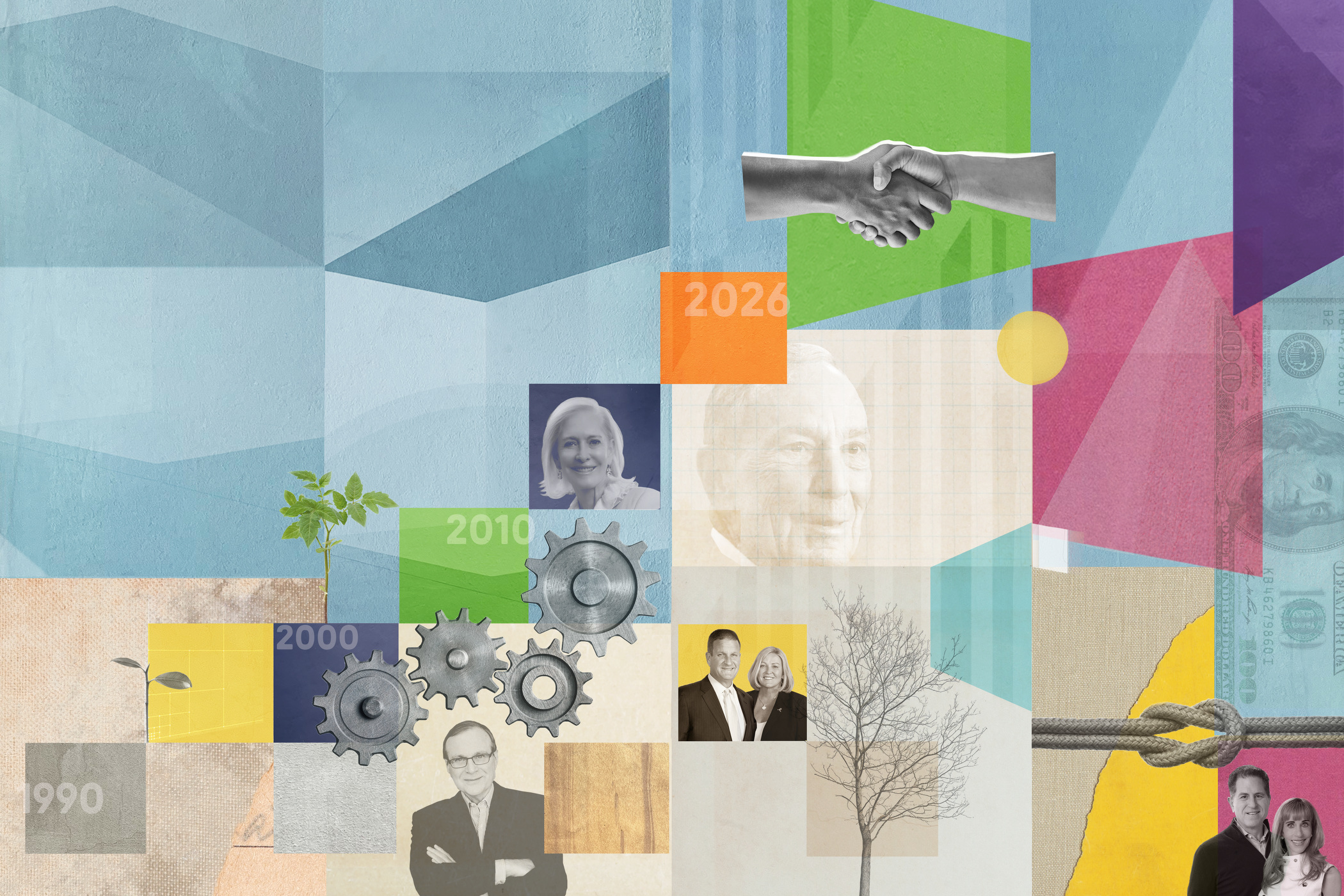
For the third consecutive year, Michael Bloomberg topped the Chronicle’s list. He gave $4.3 billion to support arts, education, the environment, public health, and programs to improve city government. He was followed on the list by Bill Gates (No. 2, $3.7 billion), for gifts to the Gates Foundation, and Paul Allen (No. 3, $3.1 billion), who left a bequest to start a foundation focused on science and technology. Rounding out the top five are Warren Buffett (No. 4, $1.3 billion), for gifts to four family foundations, and Michael and Susan Dell (No. 5, $975 million), for gifts to their foundation and donor-advised fund.
The Knights rank No. 6 ($866.2 million). In addition to the $500 million they gave to the cancer institute in 2025, the couple gave $366.2 million to their giving vehicles to support a range of causes including scientific research and efforts to bolster economic mobility.
The donors on this year’s list gave a total of $22.4 billion to charity in 2025. The median gift was $105 million. Roughly two-thirds of them work in finance or technology, including Buffett, who retired as CEO of Berkshire Hathaway at the end of last year. He is the oldest donor on the list, at 95.
These multimillion dollar gifts flowing from the uber-wealthy may seem unattainable to most charities. The customary beneficiaries — major research hospitals and prestigious universities, often with fundraising staffs of 200 people or more — snared a significant share of Philanthropy 50 gifts again in 2025.
But lesser known charitable programs also received large gifts, including $25 million to the Mary Cariola Foundation to help people with disabilities, and $5 million to an organization that provides services for senior citizens.
Donors on the Philanthropy 50 give for many of the same reasons that everyday donors do. They give to groups that seek their input, that understand their own passions, that are open to collaboration, and that can show their interventions work. Most important, they give to people and charities they have known and trusted for years, if not decades.
The Chronicle found that more than two-thirds of the donors on the list — 35 out of 51 — had long-term relationships, often lasting five to 10 years or more, with the charities to which they gave the most in 2025.
“It’s about building relationships,” says Jeff Schreifels, a fundraising consultant at Veritus Group, which works with both large and small charities. “It’s being that bridge between the donor and their desire to change the world and matching that up with everything that the nonprofit does. That’s what everyone is trying to do.”
A Lifetime Relationship With a Donor
Small and medium-size charities can learn from their bigger counterparts about the patience required to migrate donors toward major gifts, says Alison Powell, a partner at Bridgespan, who leads the consulting company’s philanthropy practice. Universities and hospitals enter the game with advantages — lists of alumni and patients and huge fundraising staffs — and yet the path to transformative gifts still takes years.
For the smaller charities focused on social change that Bridgespan works with, the process can be even slower. Nonprofits that received a gift of $10 million or more from a donor had gotten a median of four smaller gifts before the big one came through, a Bridgespan study found.
“It’s not going to be one call and then manna from heaven,” Powell says. “It’s a slow process of building a lifetime relationship.”
It is ever more important for fundraisers to target these big donors effectively. A 2024 study from Candid, Network for Good, and GivingTuesday found that the 0.3 percent of donors who gave $50,000 or more accounted for 45 percent of all giving in a single year. At the same time, the population of very wealthy people is growing. The number of U.S. households with wealth of $30 million or more has nearly doubled in the past five years, from 101,000 to 192,000, according to Altrata, a firm that researches global wealth.
“Even though many nonprofit leaders are sure they don’t have any billionaires or centi-millionaires on their donor lists, there are often people with substantial wealth that they’re not aware of,” says Alex Johnston, a founding partner at Building Impact Partners, a philanthropy-advising firm.
Even with more of them around, critics point out that the ultrawealthy aren’t particularly generous.
Nineteen donors on the Philanthropy 50 also appear on the 2025 Forbes 400 list. The 19 together have a combined net worth of $1.1 trillion. Yet they gave away a combined $16.5 billion last year — only 1.5 percent of their wealth. Just 12 of the donors on the Philanthropy 50 have signed the Giving Pledge.
Nonprofits are increasingly in competition for these donors, even if they are only giving away tiny slices of their wealth. But cultivating relationships with rich donors is not without its risks. A donor’s reputation might change over time. That has been made clear from the fallout for some individuals who appear in the documents the Department of Justice released from its investigation of convicted sex offender Jeffrey Epstein. In February, Bill Gates addressed his ties to Epstein at a Gates Foundation meeting where the foundation said he “took responsibility for his actions.” Gates, who appears in the documents, has not been accused of wrongdoing and denies any criminal activity.
When fundraisers do approach these big donors, they need an effective strategy for building relationships.
One common mistake is that fundraisers move far too quickly to the ask, says Melanie Lundquist, who, along with her husband, Richard, ranks No. 42 on the Chronicle’s list, primarily for their $50 million gift to Torrance Memorial Medical Center.
“I personally don’t believe that the nonprofit world is very good at stewarding their donors,” she says.
The groups that understand how to build real relationships stand to benefit.
McPherson College is among the best, Lundquist says. The couple’s relationship with the institution began by chance. Richard Lundquist is an avid collector of vintage cars, and it turns out that the person who revived some of them serves on the auto restoration program’s advisory board. He knew the Lundquists would be interested in McPherson’s renowned program.
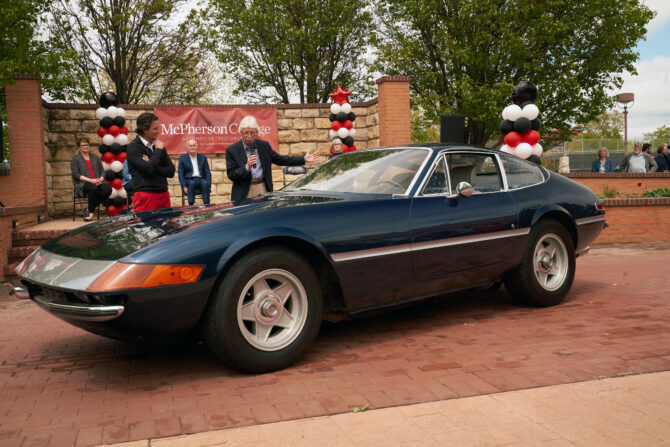
Michael Schneider, McPherson’s president, spent hours on the phone with the Lundquists, soliciting Richard’s advice about how to structure the program.
“Anybody who’s teaching a class on fundraising should talk about Michael Schneider and how he builds his donor pools,” Melanie Lundquist says. “He pulls donors in as stakeholders.”
The couple’s first gift to McPherson was small. For Richard’s birthday in 2012, Melanie gave McPherson $5,000 to help buy tools through its Red Wrench Club. The couple followed up with a $100,000 gift later that year.
In 2019, they gave the college $1 million, and in 2022, $50 million. They may not be done: Richard’s 1972 Ferrari 365 GTB/4 now hangs in McPherson’s new student center.
“It’s gonna be hard for Richard to stay away from McPherson, Kansas,” Schneider quips.
Finding an Authentic Connection
Open-ended discussions with potential donors can be far more important than the kind of focused requests for support that many fundraisers are trained to aim for, says Johnston of Building Impact Partners. Talking with donors about what an extraordinary success for them would look like — and what challenges stand in their way — provides an opening for fundraisers to talk through opportunities and hurdles for their own organization, he says. Money may start to flow from those conversations alone.
“What surprises me in many instances is neither the donor nor the leader can specifically recall an ask,” Johnston says. “What they recollect is simply a growing sense of convergence and partnership and a desire to work together.”
One of the best springboards to a transformative gift is when the donor and the charity’s leader make an authentic connection — far removed from the lingo of fundraising.
Ron Herndon has been the director of Albina Head Start, in a historically Black neighborhood in Portland, Ore., for 50 years. In 1984, he connected with Phil Knight, when Nike was looking to open its first factory store in Los Angeles.
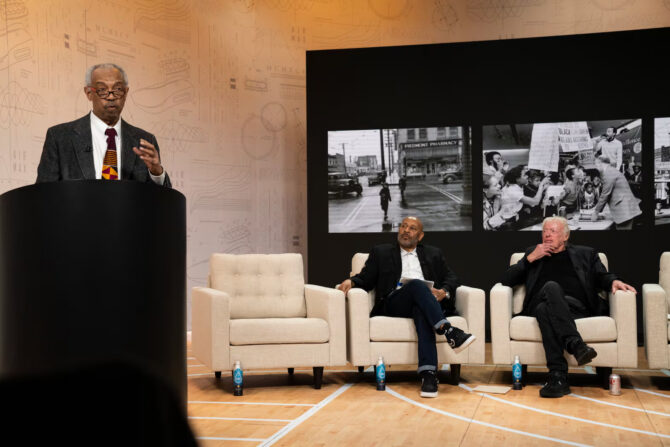
“You don’t know anyone down there,” Herndon recalls telling Knight. “Those cats will steal you blind.”
Herndon and others persuaded Knight to start in northeast Portland instead — and donate a portion of profits to charities in the Black community.
In the 1990s, Herndon encouraged Knight and Nike to donate $2.6 million to put computers in Head Start classrooms around the county, and he later prodded the company to bring in Head Start leaders for a managerial boot camp.
Since 2020, the Knights have given Albina Head Start roughly $30 million, all of it without restrictions on how it can be spent. The charity has used the funds to pay off mortgages, renovate a building, and purchase three new structures. Herndon insists he hasn’t asked for a dime.
“He took the reins himself,” Herndon says. “I consider Phil Knight a friend. I don’t go to my friends and say, ‘When are you going to give me some more money?’”
Clear Results Still Matter
Relationships matter to most donors, but for some, results and data are what underpin and drive the connection. Strategic philanthropy — with an emphasis on measurement and documentation of outcomes — has come under criticism in the past decade, but plenty of rich people still like to invest in charities that can statistically prove they’re making a difference.
“There’s a group of donors that builds trust through data and rigor and understanding the impacts,” says Chris Addy, a partner at Bridgespan. “Being able to deliver results for society is critical to getting these big gifts.”
Laura and John Arnold (No. 13 at $335 million) fit that mold. They pursue social change through Arnold Ventures, a limited-liability company that includes a foundation, a donor-advised fund, and a 501(c)(4) organization. It supports research that identifies and spreads effective strategies in the couple’s focus areas, which include health, criminal justice, and higher education.
Supporting working nonprofits isn’t necessarily a priority — but Arnold Ventures will undertake those investments, Laura Arnold says, to demonstrate that an effective program can be replicated elsewhere and successfully scaled.
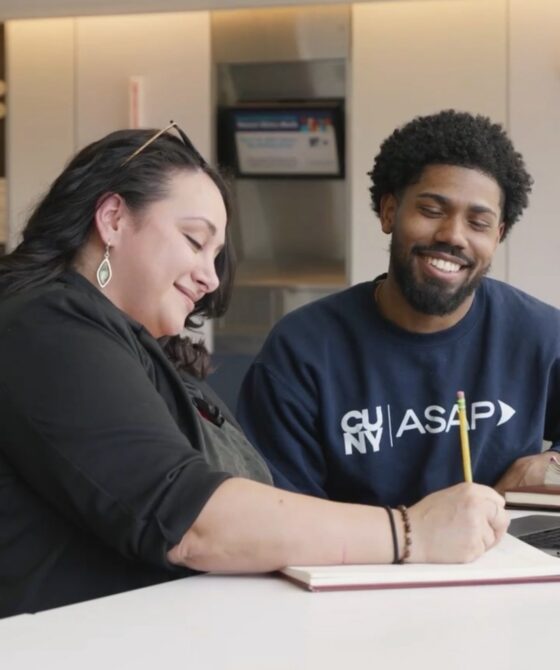
Take its support of CUNY ASAP, a program to help first-generation and low-income students succeed. Its mission is hardly unique. But the program, which started in the City University of New York system in 2007, has risen above similar efforts because of its commitment to documenting its outcomes.
Arnold Ventures has sponsored multiple randomized, controlled studies that find that participation in CUNY ASAP increases — and sometimes doubles — graduation rates.
And with those promising findings in hand, Arnold Ventures has taken the CUNY ASAP model and run with it.
Arnold Ventures has spent just $2 million supporting CUNY ASAP directly. But it’s spending another $55 million to replicate the model at community colleges around the country. One of Arnold Ventures’ biggest multiyear grant commitments of 2025 —- $35.6 million to the North Carolina Community College System — is an effort to bring the CUNY ASAP model to an entire state.
When Arnold Ventures finds a program with powerful impact, it is happy to ramp up its investment. “Then the question is, OK, this works in this environment. Can it work in a larger environment?” Laura Arnold says. “Can it work at scale?”
‘Ask for Advice, Get Money Twice’
More and more Philanthropy 50 donors are honing their own strategies — and finding charitable partners to help carry out their vision.
Jon and Mindy Gray (No. 34, at $63.6 million) got more strategic with their philanthropy in 2014 when they started the Gray Foundation. Their two primary initiatives are research on inherited cancers related to BRCA mutations – Mindy’s sister died of BRCA-related ovarian cancer at age 44 – and empowering New York City youths.
Since 2016, the Grays have been creating college-savings accounts for all public school students in New York City. The value of the 340,000 accounts at NYC Kids Rise is now up to $60 million.
In 2023, the couple started the Gray Scholars program, which provides scholarships to 10 New York City students per year to attend a historically Black college or university. UNCF administers the program, which features up to $50,000 of support for four years and student support services. The Gray Foundation contributes $2.5 million per year to UNCF to support the program.
Every year the Grays participate in a gathering for all the scholars. The Grays met with the president of Spelman College recently, and Jon Gray visited Howard University in late February. The Grays encourage UNCF to coordinate with high schools in New York that they also support: Those schools help choose which students are selected for the scholarship.
“We’re very hands-on people — we enjoy it,” Mindy Gray says. “Other people often come to us and say, ‘I want to do something, but what should I do?’ And it really is what you feel in your heart. You should not be doing this work in areas that don’t move you.”
The Grays and a growing number of philanthropists are encouraging charities to work together to achieve more than they can alone — putting groups like UNCF that are open to collaboration in the best position, says Diego Aviles, the charity’s vice president of development for the northeast region. And the right response, Aviles says, isn’t to recoil at a perceived overreach by the philanthropists. It starts with listening deeply to the donor’s vision—– and incorporating that into the organization’s strategic plan.
“The rapper Pitbull had it right: ‘Ask for money, get advice; ask for advice, get money twice,’” Aviles says. “When you echo what a philanthropist wants to achieve and demonstrate how your nonprofit can fulfill that vision, you don’t even need to lead with a specific gift amount. They often say, ‘Great — come back with a program plan and a budget.’”
“That’s going to lead to a much richer conversation and much more trust.”