Lawsuits Against GoFundMe, PayPal Fire a Fundraising Warning Shot
Alaska has sued six tech platforms for creating unauthorized donation pages, reigniting a debate over efforts to “help” nonprofits raise money without their consent.

By Rasheeda Childress
Senior Editor, Fundraising
April 20, 2026 | Read Time: 8 minutes
Nearly five months after nonprofit outrage caused GoFundMe to reverse course on fundraising pages it had created for more than a million nonprofits, the issue has returned to the limelight in a blockbuster lawsuit.
Alaska Attorney General Stephen Cox sued GoFundMe and five other tech firms — Charity Navigator, PayPal Giving Fund, Pledgeling Technologies, JustGiving, and Network for Good Inc. (doing business as ForGood) — alleging donation pages they created for charities without their consent violate Alaska law.
The lawsuits are the latest legal salvo in an ongoing disagreement over whether businesses and other organizations that support charities can raise money for charities or represent them in other ways without first seeking their approval and input.
“This should be a wake-up call to all vendors, especially all tech vendors in the nonprofit space,” says T. Clay Buck, founder of Next River Fundraising Strategies.
But will it be? Experts say organizations that benefit from nonprofit fundraising have overstepped in the past and faced legal challenges. One of those groups, PayPal Giving Fund, is named in the Alaska lawsuit. While the lawsuits wind their way through the courts, nonprofits and professional associations are thinking through strategies to protect their organizations from future oversteps by technology platforms that serve nonprofits.
Protecting Nonprofits and Donors
The Alaska cases, filed separately against each entity, say they allowed donors to give to charities via pages on their websites and that these pages were not created by or authorized by the charities. While GoFundMe’s pages were dedicated solely to fundraising, others, like Charity Navigator, included a clickable donate button on pages that offer information about a charity’s operations and impact.
“Alaska law is clear: if you’re going to raise money in a charity’s name, you must first get the charity’s consent,” said Cox in a statement announcing the lawsuits. “These lawsuits are about protecting donors, protecting nonprofits, and preserving the public trust that makes charitable giving possible.”
Laurie Wolf is CEO of the Foraker Group, an Alaskan nonprofit identified in Cox’s lawsuit against GoFundMe as one that experienced harm from the unauthorized pages. She says her organization doesn’t have a mission statement, yet a GoFundMe page that emerged in October included one. She notes GoFundMe isn’t the only one doing this, and Wolf doesn’t want her staff spending time policing websites.
“The lawsuit is showcasing that this is becoming a practice that is certainly not legal in the state of Alaska but also seems to be a common practice across all these platforms,” Wolf told the Chronicle.
These pages are problematic for a lot of reasons, Wolf says, but especially because they interfere with donor communication. “These for-profit companies have taken away the ability to be in relationship with one’s donors,” she says. “We should be able to have donor stewardship and do donor recognition and do our own donor cultivation.”
The Alaska lawsuits are asking the courts to force the groups to remove unauthorized donation pages, turn over any money due to a nonprofit, award civil penalties of $1,000 to $25,000 per violation, and require defendants to pay for the investigative costs the state incurred. In the case against GoFundMe, which came under fire for asking donors to give it a tip, the state wants GoFundMe to identify which donors gave tips and the court to determine if that money should either be returned to the donors or given to the nonprofit.
The Chronicle of Philanthropy reached out to all the groups named in the lawsuits for comment. GoFundMe sent a statement saying they created the pages to help nonprofits but changed them to opt-in only last fall after hearing feedback from nonprofits. “The changes we made last year already address the concerns raised in this lawsuit and reflect our continued commitment to transparency, accountability, and partnership with the nonprofit sector,” the statement said.
In a statement provided to the Chronicle, Charity Navigator said that as a 501(c)(3) charity, it “has remained focused on supporting and providing ratings and resources free of charge to donors and nonprofits while continuing to strengthen trust across the sector. Charity Navigator believes that it operates in compliance with the law and is committed to working through the legal process to resolve this matter.”
PayPal, Pledgeling Technologies, JustGiving, and Network for Good, did not respond to our requests for comment.
Previous Legal Issues
This is not the first time that a group has faced off with an attorney general over accusations of misleading information about nonprofit donations, says Lloyd Hitoshi Mayer, a professor of law at the University of Notre Dame who researches and writes about attorney general enforcement of charity laws.
“I’m having a strong sense of déjà vu because in 2017, there was actually a lawsuit against PayPal, one of the companies listed,” Mayer says.
In 2020, New York Attorney General Letitia James, in cooperation with 22 other attorneys general entered into a settlement with PayPal over concerns raised in the lawsuit. According to a news release about the settlement, PayPal Giving Fund had created donation pages for 501(c)(3) nonprofits telling donors that money given via those pages would go to those charities. In some cases, PayPal chose to give funds to a different charity without telling the donors.
The settlement required PayPal to include more disclosures, for example that the donations were going to the PayPal Giving Fund, which would direct donations to the charities donors selected. If the PayPal Giving Fund chose not to give the money to the charity the donor requested, it was required to notify the donor.
Platforms like PayPal and GoFundMe have a lot of consumer brand awareness, Mayer says, which makes it easy for donors to trust them, and that means they must be very careful about the approaches they use.
“What these platforms need to realize is they’re too big to do this kind of stuff, “Mayer says. “Everyone knows who GoFundMe is and who PayPal is, which means it’s worth the AGs time and effort to go after these platforms if [the AGs are] concerned about what they’re doing.”
Mayer noted that the problem is not that these groups created pages to tell donors about potential charities; it’s the donation buttons. “If all you’re doing is scraping the web for information about this charity and saying, Here’s the information, that’s fine,” Mayer says. “What makes this cross the line is that allegedly GoFundMe and PayPal and these other groups listed in the lawsuit are asking for money for these charities.”
When attorneys general get involved, what they usually want is for the group to stop the offending behavior, Mayer says. He notes that GoFundMe may have more problems than the others named, because those groups seem to have run afoul only of Alaska.
Last month 21 other attorneys general, led by California, joined forces and sent a letter to GoFundMe demanding it take “corrective action” to address potential legal violations in those states related to the pages published last fall. Potential violations include lack of consent, misleading conduct, and insufficient disclosure, according to the letter. GoFundMe responded online with a letter dated March 13 stating the company had removed the pages and explained its disclosure procedures. “Clearly, the AGs are not happy with what GoFundMe is doing,” Mayer says.
What Nonprofits Should Do
With the Alaska lawsuits underway, there isn’t a whole lot for nonprofits to do on the legal front but wait, says Mayer. Like the PayPal case earlier, it can take years for these cases to get resolved.
On more practical fronts, nonprofits are trying to figure out how or whether pages they didn’t authorize fit into their fundraising plans.
“They will randomly get a check or a distribution of funds from some giving platform that they’ve never heard of and have no relationship with,” says Buck, the fundraising consultant. “The question becomes, where did that come from? With my clients, they’re paying a little more attention to what is out there.”
Buck recommends that nonprofits audit their online presence to make sure any funding pages that are out there have correct information and are brand compliant. If they’re not, try to correct them or get them taken down.
While GoFundMe took its pages down in October and instead required nonprofits to opt in before the pages would be published, some nonprofits still have concerns, says Jim Anderson, a partner at GoalBusters Consulting.
“I don’t think that they have made sufficient effort to correct their harm,” he says. What he’d like to see from GoFundMe and any company that has created these fundraising pages for charities is a full accounting to every nonprofit of how much money was raised on their page — even if it was nothing — and to give the nonprofits all the donor information that was collected.
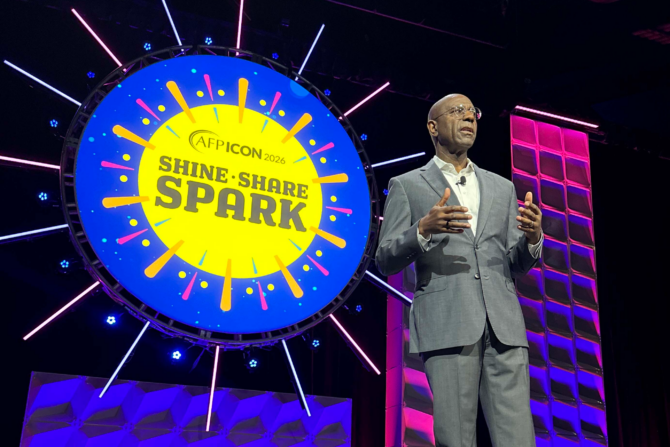
Art Taylor, CEO of the Association of Fundraising Professionals, released a video statement noting that since the controversy emerged over the GoFundMe pages, AFP has been talking to platforms and “collaborating on a solution that will put nonprofits first.”
The solution includes a framework that “emphasizes transparency and accountability, providing guidance on issues like search engine rankings, hidden fees, opt-in standards, privacy, security, and data ownership,” Taylor said in the video statement. Taylor declined the Chronicle’s request for an interview to discuss more details of this solution.
Buck notes that the nonprofit pages aren’t unilaterally bad: Some nonprofits love getting a check from a platform they didn’t know about. But many want more control, and he thinks vendors and nonprofits need to communicate more to fix this issue.
“If these platforms really want to help the nonprofit sector,” he says, “what they’ll do is they’ll actually listen to the sector.”
Clarification: This piece has been updated to clarify that the lawsuit is not against Bonterra, which purchased Network for Good B Corp. The suit is against the nonprofit Network for Good, which does business as ForGood.